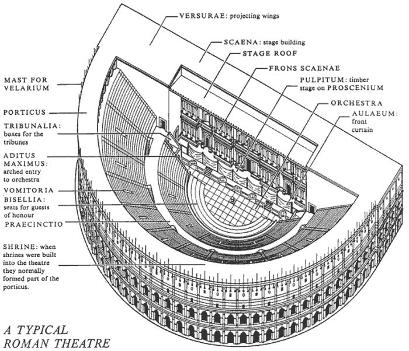
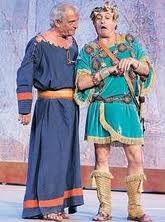
The major locations for theatres tended to be around temples so various gods could look at certain plays that were either for them or about them. Later on however, theatre began to be built on hillsides (providing more support). All over the Roman Empire theatres were erected to entertain the masses. The Roman stage went through many different stages before reaching the form we all recognise today.
The layout of the Roman theatre is very much like that of the Greek theatre. They both have an orchestra pit, a backstage area and seating arrangements. The layout of the stage was the same as in later stone stages, three doors, each opening to either the brothel (stage right), temple (centre stage) and hero's house (stage left). If a character were to enter or exit by stage left they would be going to or coming from the harbour, if from stage right they were coming or going from the town and if in the centre they were coming or going from the temple.
The plays were all basically identical; they all contained some sort of mistaken identity, three doors and stock characters (actors in masks).
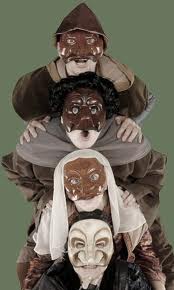
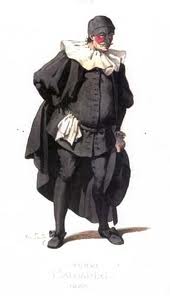
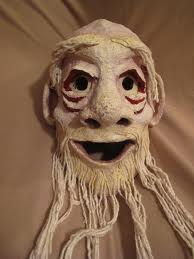
Stock Characters are player types that are repeated from play to play and although their names are changed within each new play their character traits remain the same.
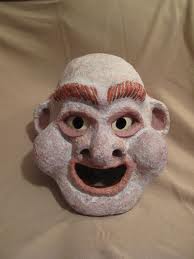
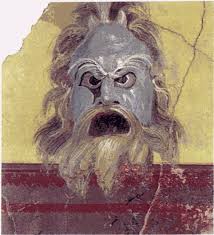
Three Common Roman Stock Characters Types:
Bucco - A
braggart (boastful), boisterous
Pappas - A
foolish old man
Dassenus - A
hunchback, swindler, drunk
BUCCO MASK DASSENUS MASK PAPPAS MASK
Task: Physicality and Characterisation of a Stock Character in a Short Scene
Below is the comedy script A Three Dollar Day by Roman playwright, Plautus, which we will discuss in class. You will need to read the script and decided which stock character you would like to play, then get into small groups and block and rehearse a short scene.