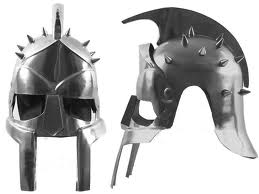
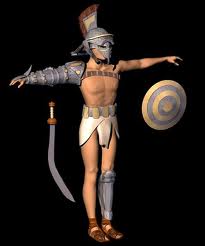
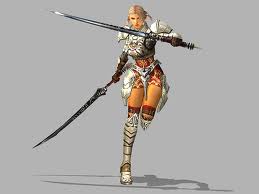
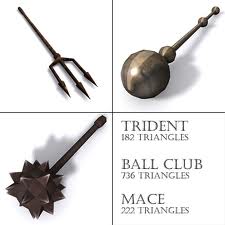
Gladiators - meaning 'Swordsman' derived from the word Gladius meaning 'sword' were armed warriors who entertained large audiences in the Roman Empire in violet battles with other gladiators, wild animals and criminals. Most Gladiators were treated as slaves, schooled in frightful conditions and ignored, but irrespective of where they came from Gladiators offered the audience an example of Rome's Martial (warlike) principles and in their battles, as well as their deaths, they inspired admiration and popularity. Gladiatorial games were run by politicians who wanted to reach the top. They would often organise shows to drum up votes, thus helping them rise in power. Ownership of Gladiators, or a Gladiatorial school, gave muscle and flare to Roman Politics. Some of the greatest Gladiator Games were held at the Great Colosseum built in Rome, seating approx. 50,000 spectators. By the third century, however, the Gladiator popularity was no longer at its peak, People could no longer afford to go to the games and finally at the turn of the fifth century after Christianity was adopted as the State Religion The Gladiator Games were banned. The Games were replaced by Theatrical shows and the newly popular Chariot Races. (Mocomi, 2012) |
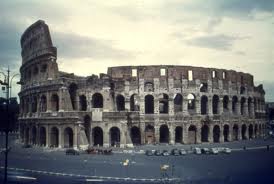 | 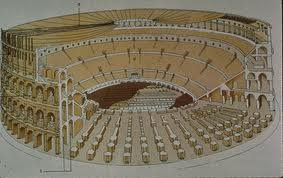 |
The Colosseum in Rome was the biggest theatre of it's time.
When we study these adopted Roman warriors we realise that there are many different types of Gladiator.
Watch the link below.
Costume Design
Task: Choosing a Character and Designing a Costume After watching the video above please choose the type of Gladiator that you would like to portray and design the costume and weapons you would use. You will need to use evidence from the video documentary The Different Types of Roman Gladiator as well as evidence from your own experience and wider research. Type your design brief in the box below and press submit. You will also need to complete your Gladiator costume and weapon design, on the design sheet handed out in class, and add to your portfolio. Task 1 |