|
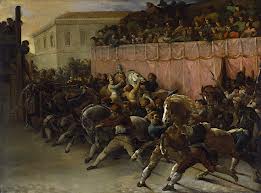
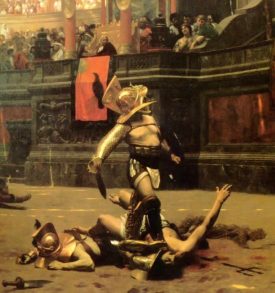
The Roman Republic and its subsequent empire greatly enjoyed the arts and entertainment.However, of the many playwrights of ancient Rome, only a small percentage of plays have survived the passage of time. It would seem that the Roman public loved a good spectacle. They loved to watch combat and blood sports, (this is no wonder with leaders such as the conquering general, Caesar and those madmen emperors like Nero). The Roman public were not prudish or modest and the audiences were ready to move on from the non violent theatrical playwrights handed down by the Greek Theatre. Rome was ready to take the theatre up a notch and boy did they do it! (Bradford, 2013) |
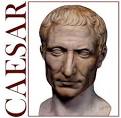 |
JULIUS CAESAR - Roman Dictator General, Statesman, Consul, Author of Latin prose Born : 13 July, 100BC Assasinated: 15 March, 44BC at the Theatre of Pompey |
FORMS OF ROMAN THEATRE Pantomime - Performers used masks, historical story telling and mythology Mime - Short, spoken, both serious and comic, no masks, violent, sexual and scoffed at Christianity Comedy - No scene division, songs, action, 2 playwright's material survived - Plautus and Terence Tragedy - Elaborate speeches, violence, horror. 1 playwright's material survived - Seneca |
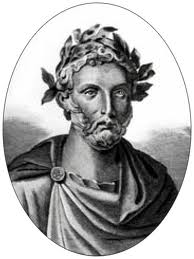
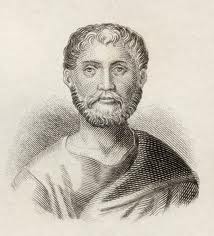
FAMOUS PLAYWRIGHTS Titus Maccius Plautus - ( Plautus) 254 - 184BC Plautus was a very popular Roman playwright who based his comedies on Greek New Comedies and added latin dialog, poetic meters and witty jokes. Publius Terenius Afer - (Terence) 195 - 159BC Coming to Rome as a boy slave Terence's life is a classic rags to riches story. All his six plays survived time and his forte was characters and double-plots. His plays were less boisterous and obtained more elegant language than Plautus, he was, however, less popular than Plautus. Lucius Annaeua Seneca - (Seneca) 5BC - 65AD In addition to his tragic playwrights Seneca was a lawyer and Roman senator, he witnessed some dark days in the Roman empire and was eventually ordered to commit suicide by the then Emperor, Nero. |
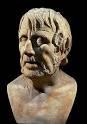

Plautus Terence Seneca Emperor Nero